

Industrial Planning
Connecting enterprise demand with land, infrastructure and an actionable development pathway.
Planning Brief
Industry strategy, land use and infrastructure
Industry Positioning
Match sector opportunities with local strengths and business demand.
Integrated Infrastructure
Connect access, logistics, utilities and supporting services.
Staged Development
Align delivery with demand and infrastructure readiness.
Planning and Design
Translate industry requirements into practical development briefs.
Long-term Value
Plan for adaptable places, productive businesses and enduring community value.
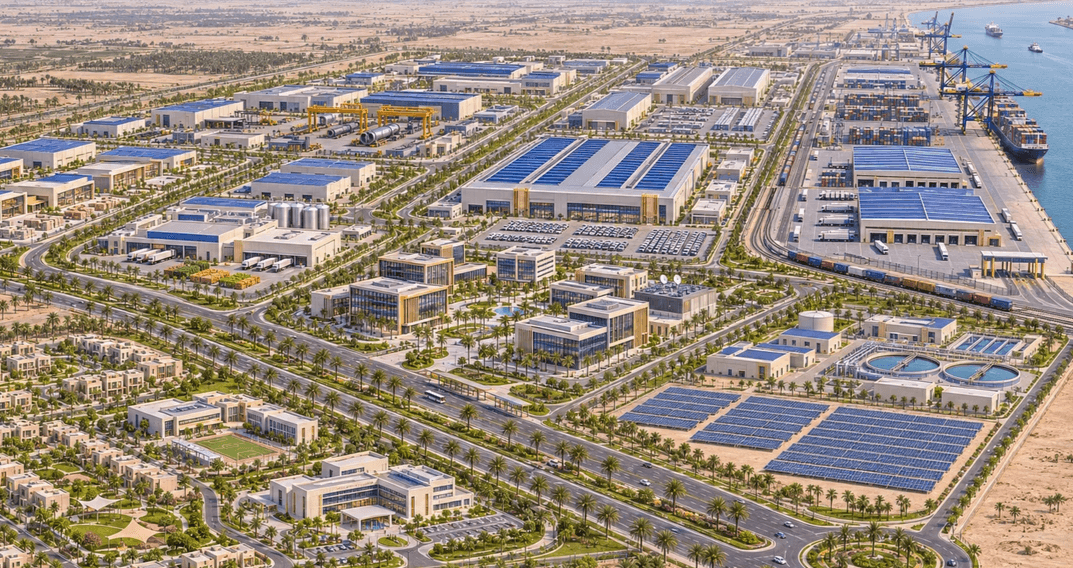
Plan the Industry. Shape the Place.
Connecting productive land uses, logistics and infrastructure within one practical development framework. Stock photography illustrates our planning focus.
Economic and Industry Positioning
Assess resource endowment, location, existing industry, customers, supply chains, talent and infrastructure. Validate the industry proposition with prospective operating enterprises and market evidence before selecting sectors or committing to land and capacity.
Market Demand and Occupier Needs
Demand assessment considers the type, scale and timing of space required. Business interviews and market evidence can inform land allocation, building requirements, utility loads and the supporting services needed for an investable development proposition.
A Focused Industry Proposition
Sector priorities should be supported by location advantages and a realistic route to market. A focused proposition helps partners understand the intended users, the infrastructure required and the practical value offered by the precinct.
Integrated Land-Use Planning
Industrial activity, logistics, commercial services and community uses should be arranged to work together. The planning framework considers compatible uses, appropriate separation, development intensity, future expansion and the relationship with surrounding areas.
Movement and Infrastructure
Freight access, internal circulation, public transport and pedestrian connections are assessed alongside power, water, communications and waste services. The design brief identifies key capacities, dependencies and infrastructure that must precede development.
Design for Adaptability
Sites and buildings need to accommodate changing operations. Flexible lot sizes, functional access, efficient servicing and room for expansion help the physical plan respond to business growth and new technology over time.
Planning Pathway and Technical Studies
The planning route depends on the location, proposed uses and applicable requirements. Specialist investigations may address transport, environment, ground conditions, servicing and community impacts. Early scoping helps identify the studies and decisions needed to progress.
Delivery Staging and Commercial Logic
A masterplan needs an implementation sequence. Enabling infrastructure, initial occupiers, funding requirements and operational readiness shape the first phase. Later phases should have clear triggers and a practical relationship to market demand.
Low-carbon Development & Community Wellbeing
Map energy, water, materials and by-products to identify technically and commercially viable exchanges. Assess environmental permissions, quality, distance and reliability. Align efficient infrastructure with housing, education, healthcare, public space and community services.
Learning From Wolfsburg
Wolfsburg connects its anchor industry with suppliers, research, skills and urban life, while seeking economic diversification. Lucky applies the principle of coordinated enterprise, talent and place development to local conditions. Official reference: https://www.wolfsburg.de/wirtschaft/standortkonzept_2035plus. This is a learning reference, not a Lucky partnership or project.
Learning From Kalundborg
Kalundborg demonstrates cooperation between public and private enterprises to exchange energy, water and material streams. Lucky would test each potential exchange against local demand, technical compatibility and viable agreements. References: https://www.symbiosis.dk/en/om-os/ and https://www.symbiosis.dk/en/strategi-2035/. No affiliation or cooperation is implied.
Discuss a Planning Opportunity
Send your site location, land area, current planning status, available studies and development objectives to admin@luckyrealestategroup.com. For industrial proposals, include intended sectors, utility requirements and the anticipated timetable.

Lucky Group
Industry-led Development
Our Capabilities
Industrial Planning
Development
Industrial Operations
Industry Funds
Contact
admin@
Meetings by appointment.
© 2026 Australia Lucky Group. All rights reserved.